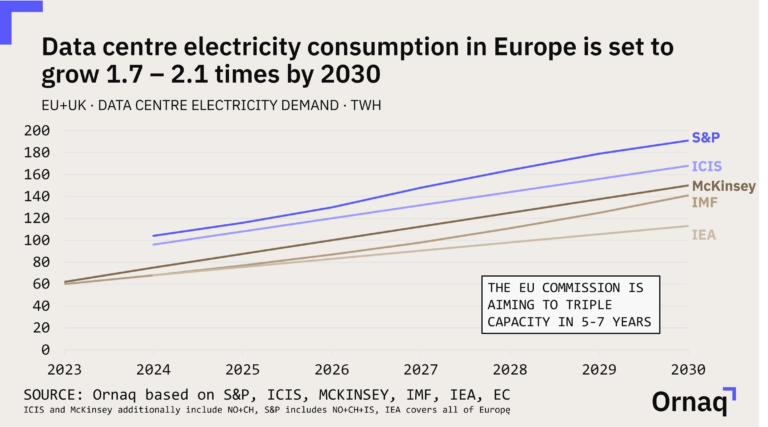
We're launching the full database soon!
Subscribe to get the latest updates. Our CEO also runs a weekly newsletter.

In at least five European countries, the capacity of data centre projects queuing for a grid connection now exceeds national peak electricity demand. Most of that will never be built. Solutions exist to manage the grid connection process and ensure the best projects move forward as quickly as possible.
Grid connection queues are not an entirely new phenomenon. Tens of gigawatts of wind and solar have experienced delays in the grid connection process, and resolving that backlog was a core objective of the EU’s Grids Package.
The challenge is now moving to the demand side. It’s more severe though: the queues are mounting at unprecedented speed, and their volume is becoming too big to treat as a robust input into the grid planning process.
The issue has moved to the top of regulators’ agendas in 2026. In the US, the Federal Energy Regulatory Commission (FERC) launched an action to speed up large load integration and Texas approved a new large load framework. In the UK, Ofgem consulted on commitment fees for data centre connections, and Denmark paused new connections before proposing an emergency grid law.
Two dynamics are at play that require swift handling: delays in the grid connection process hold back valid investments, but the large volume of speculative projects makes grid planning extremely difficult.
In multiple countries, the capacity of loads waiting for a grid connection now exceeds national peak electricity demand, in Denmark by a factor of up to 9x.
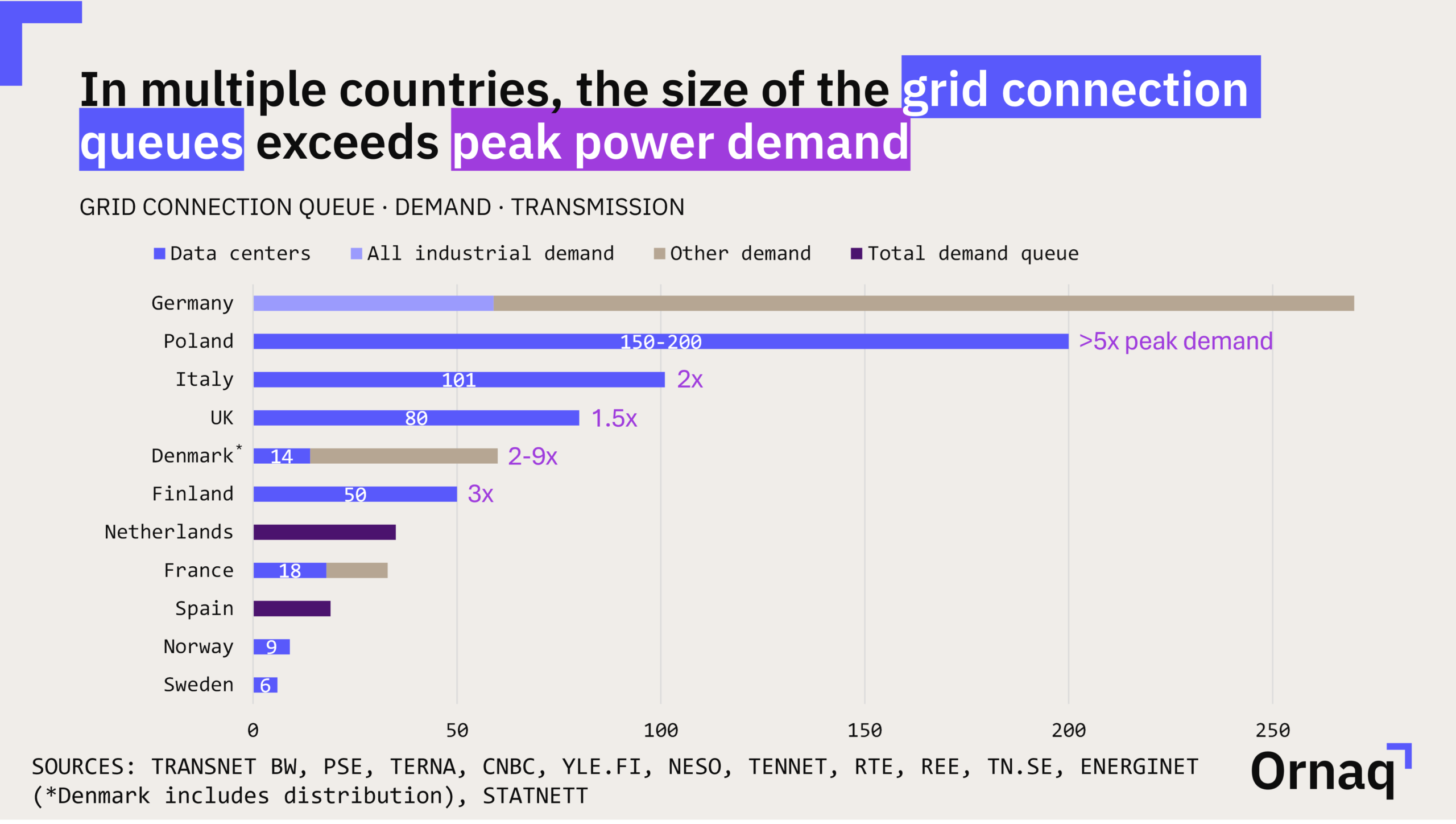
The gap between applications and plausible demand is wider where the existing data centre market is small. Poland’s 150-200 GW of data centre requests compare with roughly 200 MW of installed capacity, in a power system where about half of electricity still comes from coal. Terna expects only 1.5-2 GW of Italy’s 101 GW to materialise by 2030, while the current capacity is around 200 MW too.
Finland can be considered the other side of the spectrum: Fingrid is planning for industrial and data centre growth of up to 96 TWh by 2035, which is more electricity than the whole country consumes today. This is an example of deliberate planning, highlighted by strategic projects with Google or Microsoft.

A note on the data. The queue figures are not directly comparable. Operators report different metrics, and generation and demand queues, as well as transmission and distribution levels, need to be separated. Germany’s often-quoted 600 GW of distribution-level battery requests is frequently mixed with transmission-level figures. France’s 18 GW is pre-planned allocation, a stricter number than the unverified queues in Poland or Italy. Consistent, comparable reporting of connection queues is in itself a key policy recommendation.
The historical design of the allocation process is called: “first-come, first-served”. The projects which filed for connection first, are processed first. This leads to speculation – filing for multiple sites in parallel, holding positions in the queue for projects that are not being realized, or even booking of grid capacity for the sole purpose of reselling the queue position. The latter was raised by Italy’s grid operator Terna, who flagged that developers are using data centre grid connections to raise land values.
Data centres are only one component of the demand-side connection queue. In Denmark, data centres are only about a fourth of the total queue, with the rest occupied by batteries, power-to-X technologies or electrification. In Germany, 211 GW of the 270 GW transmission-level queue is grid-scale storage.
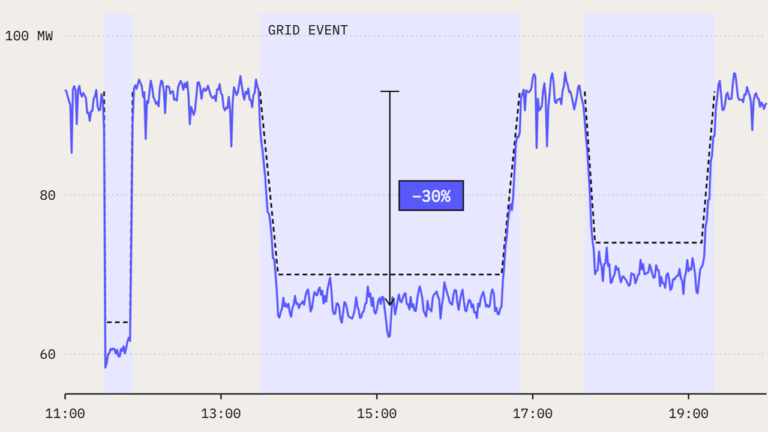
This adds another layer of complexity to the already inconsistent grid queue data. Additionally, different types of loads require different handling. Data centres, if acting as 100% firm loads and located near existing demand centres, have a very different impact on the power grid than energy storage systems. That’s why flexibility is increasingly incentivized by grid operators.
In many countries the response has been largely reactive. Changes are applied quickly though, with multiple grid operators and regulators moving from the “first-come, first-served” approach to “first-ready, first-served”.
FERC’s Order 2023 was one of the first examples of that being done for the generation side. After the Department of Energy asked FERC to extend this logic to demand, FERC’s June 2026 action called for a tariff reform, recognizing co-location and load flexibility. Texas’s operator ERCOT now selects a “Batch Zero” of the most advanced projects, charges a $100,000 study fee, and asks for data on dynamic load behaviour.
In Europe, the historical data centre hubs like Ireland, the Netherlands, Germany and the UK – were the first to reform, forced by grid congestion and even issuing temporary memorandums.

By late 2026, multiple European operators and governments acted to reform the connections process. Increasingly, projects that contribute to the energy system – through offering flexibility, heat reuse, surplus clean power, or other forms of benefit, are incentivized. Financial commitments are also growing, to eliminate speculation and avoid projects without proper financial backing. One of the more radical approaches is Ofgem’s proposed fee of up to £712,500 per MW – refundable on energisation, but an order of magnitude more than Texas’s $50,000 per MW.
The emerging practice points to a set of measures that regulators and system operators can adopt without waiting for EU-level legislation.
The ultimate goal should be to move from reactive grid queue management to making data centres net-positive for the power system and the wider economy.
While the above rules can already be applied on national level, a consistent pan-European approach would provide multiple benefits – lowering costs and streamlining projects. The EU’s work under the Cloud and AI Development Act, the Minimum Performance Standards for data centres, and any actions under the Grids Package, are ideal opportunities to codify these best practices and unlock the vision for grid-positive data centres in Europe.